In partnership with

The Reset Series™
Vitae Weekly Reset — Issue #35 · 5 August 2026
Checking Before You Trust the Label
Five pieces this week, and each one is really about the same thing: checking what’s actually in front of you rather than trusting the label or the headline.
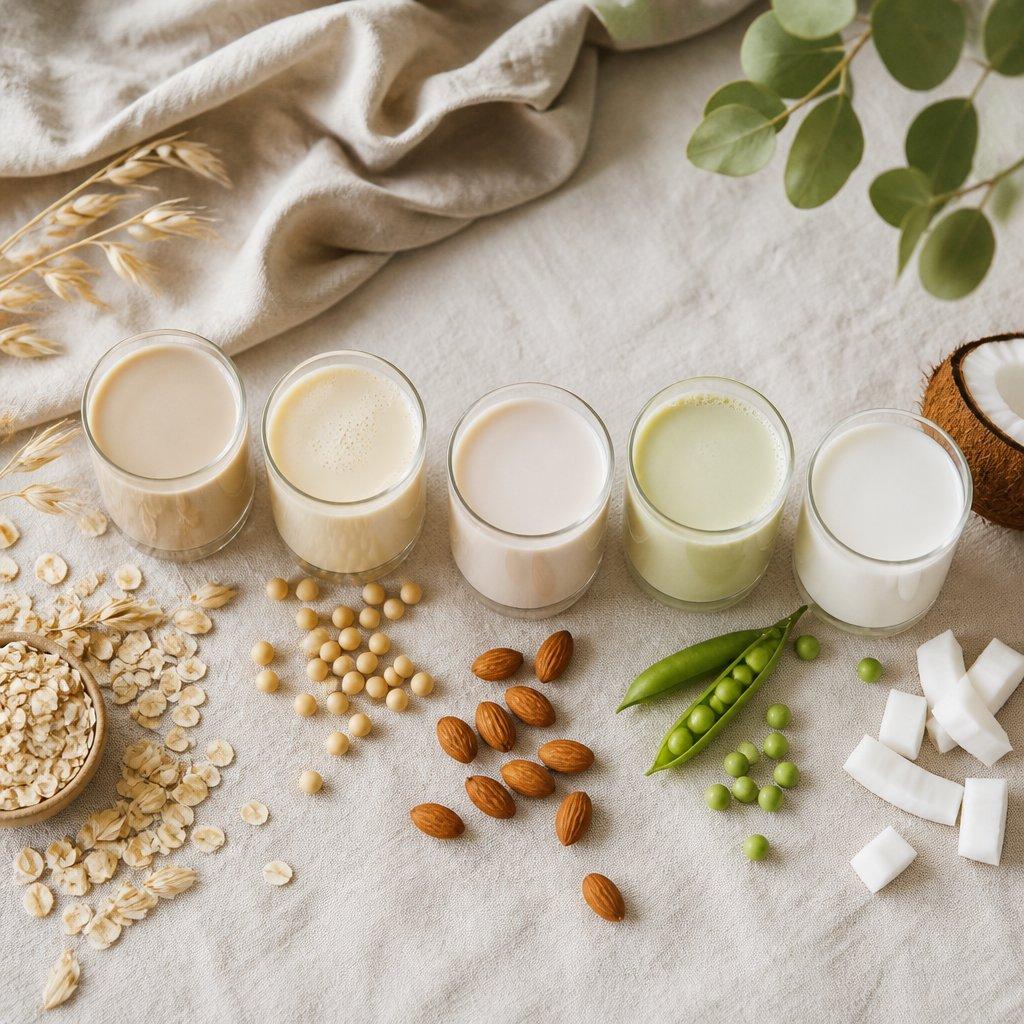
Oat, soy, almond, pea, rice and coconut milk all get compared side by side, with dairy as the benchmark — and the winner depends entirely on what you’re optimising for. Plant milk’s ingredient lists get properly scrutinised too, since some cartons contain three ingredients and others contain a dozen, with almost no way to tell from the front of the pack. We also dug into why lactose intolerance is so wildly different across UK ethnic groups — a genetic story most people have never heard. Strawberries get put through every major nutrient-density ranking going, with a more interesting answer than “yes” or “no.” And a major review of 350 studies makes the case that most sedentary adults are eating more protein than they need, not less.
None of this is about giving anything up. It’s about knowing what’s actually in the glass, the bowl, or the bar.
— The Vitae Team
Plant milk comparison
 
This week on the Vitae blog
Plant Milk Comparison: Oat vs Soy vs Almond vs Pea vs Coconut
Soy and pea lead on protein. Oat leads on fibre and froth. Almond and rice are nutritionally thin without fortification. Here’s every plant milk compared against dairy, with the actual numbers.
Read →
 
Is Your Plant Milk Actually Ultra-Processed?
Some cartons contain three ingredients. Others contain a dozen. Here’s how to actually tell an ultra-processed plant milk from a genuinely simple one, without trusting the front of the pack.
Read →
 
Why Is Dairy Intolerance So Different Across the UK?
White British adults have some of the lowest lactose intolerance rates in the world. Other UK communities have rates up to 75%. The reason is written into a single stretch of DNA.
Read →
 
Are Strawberries the Healthiest Fruit?
Strawberries score near the top of every major fruit ranking going. Whether they’re genuinely “the healthiest” depends entirely on what you’re measuring.
Read →
 
Could Eating Less Protein Slow Ageing?
A review of 350 studies suggests most sedentary adults are eating more protein than they need — and that less might support healthier ageing. Here’s what it actually found, and what it doesn’t.
Read →

Smart starts here.

You don't have to read everything — just the right thing. 1440's daily newsletter distills the day's biggest stories from 100+ sources into one quick, 5-minute read. It's the fastest way to stay sharp, sound informed, and actually understand what's happening in the world. Join 4.5 million readers who start their day the smart way.

This week’s deep dive — a new free guide
The Complete Guide to Dairy and Plant Milks
The third in our free Learn series, and the most comprehensive yet — a full comparison of dairy alongside oat, soy, almond, pea, rice and coconut milk, starting with the question most articles skip: why did so many people give up dairy in the first place?
The answer isn’t taste or trend. Globally, 65–70% of adults have reduced lactase activity after infancy. The UK is a genuine outlier — only 5–10% of white British adults are lactose intolerant, against up to 75% of non-white British adults, a gap rooted entirely in the evolutionary history of dairy farming in Northern Europe.
From there, the guide works through every major plant milk in turn: what’s actually in it, what it’s fortified with, what it’s genuinely good and bad for, and the newest development in the category — coconut milk splitting into three distinct products, including barista blends now fortified with added legume protein to compete with oat and almond in coffee shops.
Read the guide →
 
Quick wins for this week
Check the protein line before the ingredients list
If you’re relying on plant milk daily rather than occasionally, protein content is the number most worth checking — soy and pea deliver 7–9g a cup; almond and rice deliver under 1g.
Count the ingredients, not the front-of-pack claims
“Natural,” “clean” and even “organic” don’t reliably indicate a short ingredients list. A genuinely simple plant milk has two to five ingredients; a standard one often has eight or more.
If dairy consistently upsets your stomach, that’s common, not unusual
Most of the world’s adult population has reduced lactase activity. It’s worth getting properly tested rather than guessing, since tolerance is often more variable than people assume.
If you’re sedentary and adding protein out of habit, it’s worth questioning
The evidence for high protein intake is strongest for people training regularly. If that’s not you, more isn’t automatically better.
 
The Reset Companion
Working out which plant milk actually suits your situation — or whether a supplement or dietary change is worth it for you specifically — is exactly the kind of question the Reset Companion is built to help with.
Try the Reset Companion — 30 free messages →
 
Every piece this week comes back to the same small habit: reading past the front of the label. Soy milk and oat milk both say “plant milk.” Standard coconut milk and a barista blend both say “coconut milk.” A three-ingredient oat drink and a twelve-ingredient one sit on the same supermarket shelf. None of that is dishonest, exactly — it’s just that the category name was never designed to tell you what you actually need to know.
The five minutes it takes to check the panel is usually the whole difference.
Back next Wednesday.
The Vitae Team

Wake Up Smarter About AI.

The president of OpenAI. The CEO of Google. The founder of LinkedIn. We talk to the people building AI. Every morning, we put what they told us in your inbox.

What they're actually worried about. What they're betting on. What's coming next. Delivered in five minutes, before your first meeting.

With one email, and only five minutes, you can stay ahead of 99% of the world.

 
If you missed Sunday’s Lifestyle Edit
Richmond Park at dawn
London Before 7am
We went looking for London before it wakes — six places, all open and better before 7am.
Billingsgate Market — Winding Down by 7
25,000 tonnes of fish a year, open to the public from four in the morning, largely finished trading by the time most of London sits down to breakfast.
Padel Social Club, Earl’s Court — Courts From 6am
Glass-walled courts open from six in the morning, the wrong way round from how London’s padel boom usually runs.
BLOK Clapton — A Tram Depot, Repurposed
Before it was a gym it was a derelict Victorian tram depot nobody wanted. A 6:30am BLOKSTRENGTH session inside cast iron pillars and vaulted brick.
London Fields Lido — Saved by the People Who Swam In It
Heated to 25°C, open from 6:30am, and only here because a local campaign refused to let it stay closed after it shut.
Regency Café — London’s Great Art Deco Greasy Spoon
Open since 1946, closed for a year and a half, and back exactly as it was under new ownership.
Richmond Park at Dawn — In for the Deer, Out for the View
Cambrian Gate before the park properly wakes, and a walk that ends at the only view in England protected by its own Act of Parliament.
Read The Lifestyle Edit No.25 →
 

Wake Up Smarter About AI.

The president of OpenAI. The CEO of Google. The founder of LinkedIn. We talk to the people building AI. Every morning, we put what they told us in your inbox.

What they're actually worried about. What they're betting on. What's coming next. Delivered in five minutes, before your first meeting.

With one email, and only five minutes, you can stay ahead of 99% of the world.

Keep reading